
The first 48 hours decide everything
When a Toledo basement floods — a sump pump that quit during a storm, a sewer line backing up, a pipe bursting in a cold snap, or the river coming up in spring — what you do in the first day or two largely determines whether you face a cleanup or a mold remediation. Mold can begin growing on wet materials in as little as 24 to 48 hours, so the entire game is speed: get the water out, get the structure dry, and you can often prevent mold entirely. Let it sit, and the cleanup becomes a much bigger, more expensive problem. Here's the right sequence.
First: stay safe
Before you do anything, two safety checks. Electricity: don't step into standing water if it could be in contact with outlets, the furnace, the water heater, or the electrical panel — if there's any doubt, shut off power to the basement at the breaker (only if you can do so safely and dry) or call an electrician. Contamination: if the water came from a sewer backup or the river, treat it as contaminated "black water." It carries bacteria and pathogens, so limit contact, wear gloves and boots, and keep kids and pets out. Clean-water floods (a supply line, rainwater) are lower risk but still need fast drying.
Second: stop the source
- Burst pipe: shut off the main water supply to the house.
- Sump failure: once power is safely restored, get the pump running again, or use a backup or portable pump to clear the water.
- Sewer backup: stop running water in the house (no flushing, laundry, or dishwasher) until the line is clear, and call the appropriate plumber or the city if it's a main-line issue.
- River or surface flooding: there's no "source" to shut off — focus on safety and waiting for the water to recede before extraction.
Third: document for insurance
Before you remove anything, photograph and video everything — the water level, the affected rooms, damaged belongings, and any visible source. This documentation is what supports an insurance claim later. Then check your coverage promptly: in Ohio, a sudden burst pipe is often covered, but sewer/drain backup usually needs a specific rider and river/surface flooding requires separate flood insurance. Report the claim quickly; many policies have prompt-notice requirements. Our Ohio mold and insurance guide explains the distinctions that trip up Toledo homeowners.
Fourth: extract and dry — fast
- Remove standing water with a pump or professional extraction. The sooner the water is gone, the less it soaks in.
- Pull out what can't be saved. Soaked carpet and pad, wet cardboard, and anything porous touched by contaminated water should come out promptly — these hold water and grow mold fast.
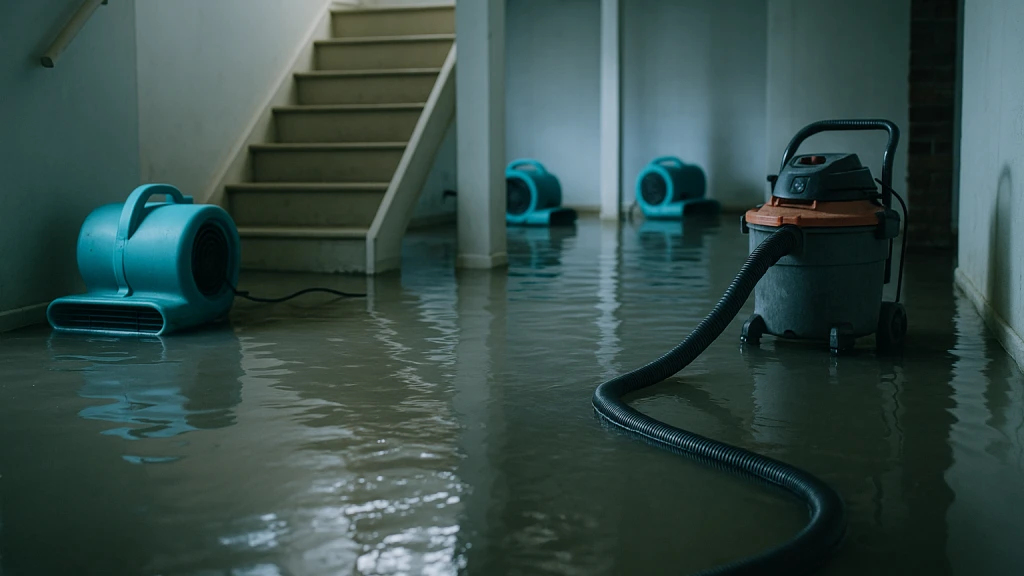
- Dry the structure with commercial air movers and dehumidifiers, drying to a measured moisture content rather than by feel. This is the step that prevents mold, and it's where professional equipment far outperforms household fans.
- Check the hidden spots — behind baseboards, inside wall cavities, under any finished surfaces — because that's where moisture hides and mold starts.
Fifth: watch for mold over the next weeks
Even with a good response, keep an eye (and a nose) on the area for the following two to three weeks. A returning musty smell, new staining, or warping means moisture was left behind and mold may be starting — at which point it shifts from a water cleanup to a remediation. Catching that early keeps it small.
When to call for help immediately
If the flood is significant, the water is contaminated (sewer or river), the basement is finished, or you simply can't dry it fast enough yourself, call a professional right away — the clock is the enemy. Because we're a referral service, we can connect you quickly with a licensed local water-damage and mold pro who has the extraction and drying equipment to beat the mold window. If you've got water in the basement right now, call (419) 574-6133 and we'll get you connected fast.
Mistakes that turn a flood into a mold problem
Some of the worst mold outcomes after a Toledo basement flood come not from the water itself but from well-meaning mistakes in the cleanup. The biggest is declaring victory too early: the floor looks dry, so the fans get put away — while the framing, the bottom of the walls, and the subfloor are still saturated and quietly growing mold for the next two weeks. A close second is putting wet, porous belongings back into the basement once it "looks fine," reintroducing damp cardboard, rugs, and furniture that re-seed the space. Others include using only household fans that dry the surface but not the structure, keeping carpet and pad that were soaked by contaminated water, and skipping the hidden spots behind baseboards and inside wall cavities where moisture lingers longest. Each of these leaves the moisture that mold needs.
The throughline is that surface-dry isn't structure-dry. The only reliable way to know the basement is actually dry is to measure it, which is precisely what professional drying equipment and moisture meters do.
Knowing when it's beyond a DIY response
For a small, clean-water event caught immediately, a careful homeowner can sometimes handle the extraction and drying. But several situations clearly call for a professional, and recognizing them quickly is what limits the damage: the water is contaminated (a sewer backup or river flood), the area is large or the basement is finished, the water sat for more than a day or two before you could respond, or you simply can't dry it fast enough with what you have. In any of those cases, the clock is working against you, and professional extraction and commercial drying are what beat the mold window. Because we're a referral service, we can connect you fast with a licensed local water-damage and mold pro who has the right equipment. If you've got water in the basement now, call (419) 574-6133 — speed is the single biggest factor in whether this becomes a cleanup or a remediation.