
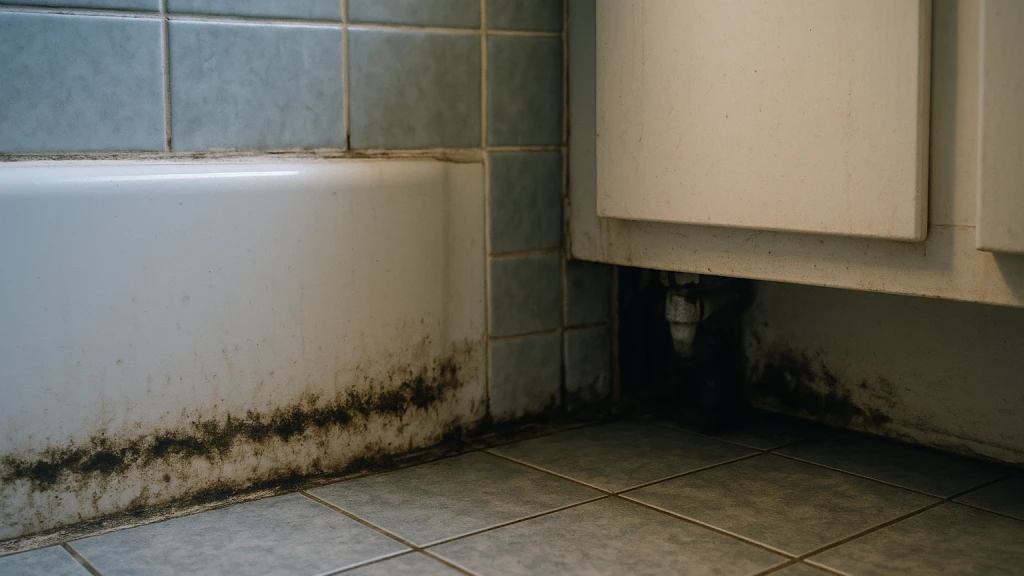
The rooms where water and surfaces meet every day
Bathrooms and kitchens are the most predictable mold spots in any Toledo home, because they combine constant moisture with lots of porous surfaces and, often, not enough ventilation. A hot shower in a small bath with a weak fan, a slow drip under the kitchen sink, a tub surround with failing caulk, a dishwasher line weeping behind the cabinet — these are everyday sources, and in a humid lake climate they don't get the help from dry air that a desert house would. The surface mold you see along the grout and caulk is usually the visible tip; the more serious growth hides in the cabinet bases, behind the tile, and under the floor where the water actually goes.
Surface mold vs. the hidden kind
It's worth separating two very different problems that look similar at the sink. Surface mold on grout, caulk, and painted drywall from steamy air and splashes is largely a ventilation-and-cleaning issue — unpleasant, but rarely structural. Hidden mold from an actual leak is the one that matters: a supply line, drain, or wax-ring failure that has been wetting the subfloor, the back of a vanity, or the wall cavity behind the tub for weeks or months. That's the growth that warps floors, rots cabinet bases, and sends a musty smell into the room even after you've scrubbed every visible spot. Telling the two apart is exactly what a moisture meter and a careful look are for.
Common Toledo bathroom and kitchen sources
- Under-sink leaks: slow drips from supply valves, P-traps, and disposal connections that soak the cabinet base and floor.
- Tub and shower failures: cracked grout, failed caulk, and bad tile work that let water into the wall cavity behind the surround.
- Toilet wax-ring leaks: a quiet, recurring leak at the base that rots the subfloor and grows mold underneath.
- Poor ventilation: missing or underpowered exhaust fans that let steam linger and condense on walls and ceilings.
- Appliance lines: dishwashers, ice makers, and washing-machine connections that weep behind cabinets and walls.
How remediation is done
For a contained, leak-driven problem, a licensed crew isolates the area, removes the affected porous materials — the wet cabinet base, the soaked drywall, the rotted subfloor section, the contaminated insulation — and HEPA-cleans and treats what's salvageable. The plumbing or caulk failure is corrected (often by a plumber working alongside the remediation), everything is dried to a measured moisture content, and the area is rebuilt with proper sealing and, where it helps, an upgraded exhaust fan. For genuinely surface-only growth, the fix is more modest: removing and replacing failed caulk and grout, cleaning hard surfaces, and improving ventilation so steam clears instead of lingering.
Why fixing the leak comes first
Bathroom and kitchen mold is the textbook case for "find the water first." Replacing a moldy vanity without fixing the drip that soaked it just dooms the new one. Re-caulking a shower that's actually leaking behind the tile only hides the wall-cavity growth. A good remediation pro insists on identifying and correcting the moisture source as part of the job, not as an afterthought — and will tell you honestly when a problem is small enough to handle yourself versus when it needs containment because it has spread into the structure.
What it costs
These are usually among the more contained — and therefore more affordable — mold jobs, unless a long-running hidden leak has spread the damage. A small, single-cabinet or single-wall remediation often runs a few hundred to a couple thousand dollars; a job that involves removing tile, replacing rotted subfloor, and rebuilding a vanity wall climbs from there. The variable, as always, is how long the leak ran before anyone caught it. If you suspect the growth has reached beyond the room — into a basement ceiling below, say — an inspection will scope it. Describe what you're seeing and we'll connect you with a local pro for a free assessment.
Simple habits that keep these rooms mold-free
Once a bathroom or kitchen mold problem is fixed, a few low-effort habits keep it from coming back — especially through Toledo's humid summers, when ambient moisture is already high. In the bathroom, run the exhaust fan during every shower and for fifteen to twenty minutes after, squeegee or wipe down wet shower walls, and keep an eye on the caulk and grout, re-sealing them at the first sign of cracking or dark staining. Leave the shower curtain or door open to dry between uses rather than trapping a damp, enclosed space. In the kitchen, run the range hood when you cook, wipe up under-sink moisture promptly, and periodically check the cabinet floor beneath the sink and around the dishwasher for the early signs of a slow leak.
The theme across both rooms is the same: clear the moisture quickly and watch the spots where water hides. None of it is dramatic, but consistent ventilation and a quick monthly look under the sink prevent the great majority of recurring bathroom and kitchen mold.
When a small problem is hiding a bigger one
It's worth a word of caution about the difference between a cosmetic spot and a warning sign. Mold around a window or on shower caulk is usually exactly what it looks like. But mold that appears low on a wall, at the base of a vanity, around the toilet base, or on the ceiling of the room below a bathroom is often the visible edge of a hidden leak that has been wetting the structure. If growth shows up in those locations, or if a musty smell persists after you've cleaned every surface, don't just treat the spot — have the moisture investigated. Catching a quiet wax-ring or supply-line leak early, while it's still a small remediation, is far cheaper than discovering it once it has rotted the subfloor or spread into the basement ceiling below.