
How to tell if your Toledo home has a mold problem
Mold rarely announces itself with a dramatic black patch in the middle of the living room. In a Toledo home, it usually starts quietly — a smell, a stain, a recurring symptom — and grows for weeks or months before anyone connects the dots. Knowing the signs lets you catch it while it's small and contained, before it spreads into framing and turns into a major remediation. Here are the twelve clues that most often point to a hidden mold problem in a Northwest Ohio house, roughly in the order you're likely to notice them.
The smells
- A musty, earthy odor. This is the number-one early sign. That damp-basement, old-book smell is the gases mold gives off as it grows. If you notice it at the top of the basement stairs, near a closet, or when the furnace first kicks on, take it seriously — the smell usually precedes visible growth.
- A smell that's worse when the HVAC runs. If the musty odor intensifies when your furnace or AC turns on, mold may be growing in the ductwork or the system may be pulling air across mold elsewhere and distributing it. In a forced-air Toledo home, that spreads spores room to room.
- A seasonal pattern to the smell. Mustiness that shows up in humid summer (basement) or appears in winter near the attic hatch (attic condensation) points to Toledo's two mold seasons and helps locate the source.
The sights
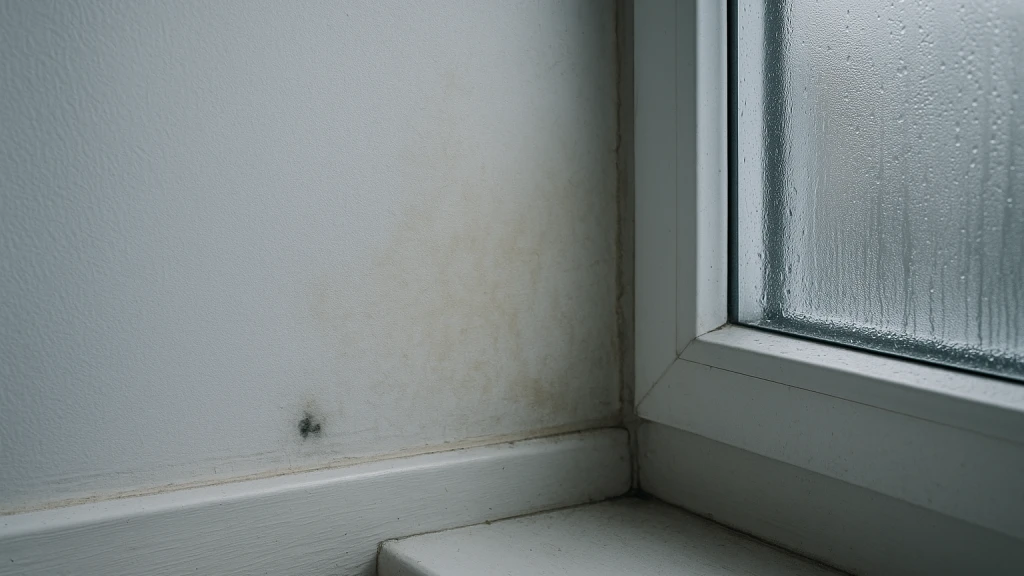
- Visible growth. Black, green, white, or grayish patches on walls, ceilings, grout, or stored items. Color alone doesn't tell you the species, but any visible growth means there's enough moisture to support it.
- Staining and discoloration. Brown or yellowish water stains on ceilings and walls mark where water has been — and where mold may be growing behind the surface, out of sight.
- Efflorescence on basement walls. The white, crystalline, powdery deposit on block or concrete is mineral salt left by water moving through the masonry. It's not mold itself, but it's a flashing sign that moisture is coming through — and mold likely isn't far behind.
- Peeling paint, bubbling, or warping. Paint that blisters, wallpaper that lifts, drywall that bows, or trim and baseboard that warps all signal moisture in the material behind them.
The structural clues
- Soft, springy, or cupped floors. Especially over a crawl space or a damp area, flooring that feels soft or has cupped points to chronic moisture and possible mold and rot in the subfloor below.
- Condensation and high humidity. Foggy windows, sweating basement walls, or a clammy feel in a room mean the humidity is high enough to grow mold even without a leak — a classic Toledo summer-basement situation.
- A history of water. A basement that has flooded, a roof that has leaked, a sump that has failed, ice dams in winter — any past water event that wasn't fully dried is a prime candidate for hidden mold.
The health clues
- Symptoms that improve when you leave the house. If congestion, sneezing, itchy eyes, headaches, or asthma flare-ups ease when you're away and return at home, indoor mold is worth ruling out — especially if the timing tracks with the humid season.
- Worse symptoms in specific rooms. If someone reacts more in the basement, a particular bedroom, or near a certain vent, that localization can point straight to the source.
What to do if you recognize these
One sign on its own — a little surface mold on bathroom grout, say — may be a simple cleaning-and-ventilation fix. But several signs together, a persistent smell, or any health pattern means it's time to find the moisture source rather than guess. Because so much Toledo mold hides behind walls, in crawl spaces, and in attics, a professional inspection with moisture mapping is the surest way to know what you're dealing with and how far it has spread. Catching it now, while it's a stain and a smell, is far cheaper than catching it later, when it's framing and reconstruction. Call (419) 574-6133 for a free assessment, or read about why Toledo homes get mold.
Sorting a real problem from a harmless spot
Not every sign on this list means a major remediation, and learning to tell the difference saves both worry and money. A little surface mold on bathroom grout or a window sill, in a spot with obvious humidity and no underlying leak, is usually a clean-and-ventilate situation rather than a structural problem. What elevates a sign to a real concern is one of three things: persistence (it keeps coming back after you clean it, meaning something is feeding it), location (it's low on a wall, at a baseboard, on a basement wall, or on a ceiling below a wet area, suggesting hidden water), or accumulation (several signs appearing together, or a sign paired with a musty smell or health symptoms). When you see those patterns, it's time to find the moisture rather than just treat the surface.
The single most reliable escalation cue is a persistent musty smell with no visible source. Because our noses detect mold's byproducts before growth becomes visible, a space that consistently smells musty even when it looks clean is the strongest indicator that there's hidden moisture and growth worth investigating.
What to do with what you've found
Once you've spotted the signs, resist two opposite mistakes: panic and denial. You don't need to flee a house over a musty basement, and you also shouldn't ignore a recurring smell for another year while it spreads through framing. The measured response is to identify the moisture source — on your own for an obvious surface issue, or with a professional inspection when the problem is hidden, persistent, or paired with symptoms. Because so much Toledo mold lives behind walls, in crawl spaces, and in attics, an inspection with moisture mapping is often the only way to know the true extent. Catching it while it's a stain and a smell, rather than later when it's reconstruction, is the whole point of knowing the signs. If anything you've read here matches your home, a free assessment will tell you exactly where you stand.