
Keeping a Toledo basement dry enough to stay mold-free
The basement is where most Toledo mold begins, so basement moisture control is the highest-leverage prevention you can do. The goal isn't a perfectly bone-dry basement — in this climate, that's unrealistic for many older homes — it's keeping the basement dry enough and the humidity low enough that mold can't establish. That comes down to two jobs: keeping liquid water out, and keeping the air dry. Get both reasonably right and you'll head off the great majority of basement mold problems. Here's how, in the order that matters.
Step one: manage the water outside
The cheapest and most effective basement waterproofing happens outside, before water ever reaches the foundation. Two things do most of the work:
- Grading. The ground should slope away from the house on all sides — aim for a noticeable fall over the first several feet. Over decades, soil settles and starts sloping toward the foundation; re-grading those low spots redirects surface water away.
- Downspouts and gutters. Keep gutters clear, and extend downspouts well clear of the foundation — several feet at minimum — so roof water doesn't dump right beside the basement wall. A single disconnected or short downspout can soak one corner of a basement all by itself.
On Toledo's flat, clay lots, these two fixes alone resolve a remarkable share of damp basements, because they stop the surface water that the clay would otherwise hold against the foundation.
Step two: protect against groundwater
When water comes from below rather than from the surface — through the cove joint or up through the slab, driven by the high water table — the defenses move inside. A reliable sump pump is the heart of it, and in Toledo a battery or water-powered backup sump is strongly recommended, because the storms that fill your pit are the same storms that knock out your power. For homes with chronic groundwater intrusion, interior drain tile feeding the sump, crack injection on poured walls, and a vapor barrier on the walls are the next line of defense. These are bigger investments, but for a persistently wet basement they're what make the difference.
Step three: control the humidity
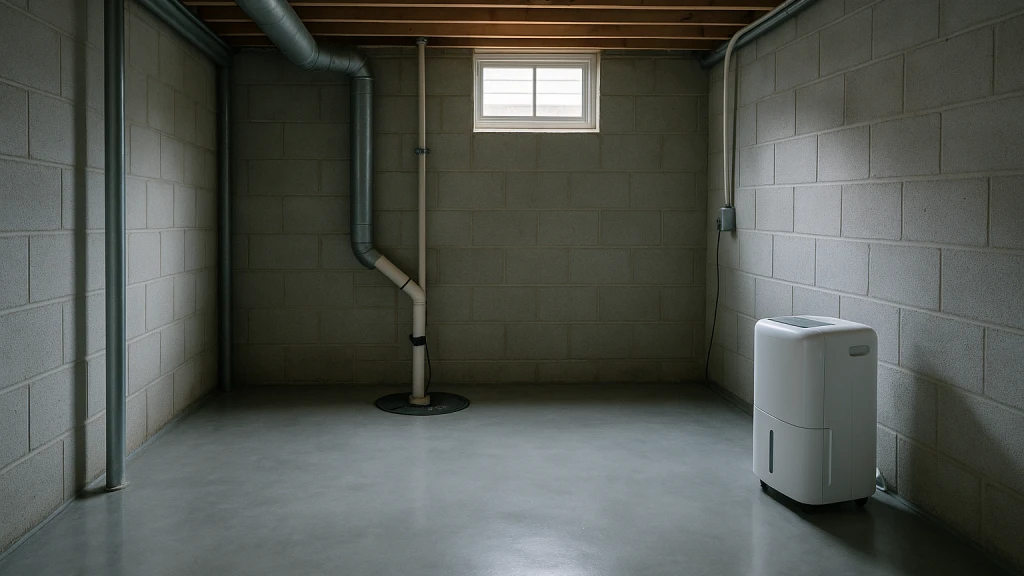
Even a basement with no liquid water will grow mold if the air stays humid enough, and Toledo summers deliver that humidity for months. The fix is a properly sized dehumidifier, run through the warm season to hold basement relative humidity in a safe range (generally below about 50–55%). A simple inexpensive humidity gauge (a hygrometer) lets you see what your basement is actually doing. Pair the dehumidifier with good air circulation and you deny mold the moisture it needs from the air, which is the piece that pure waterproofing misses.
Step four: don't trap moisture in the finishing
If you finish a Toledo basement, how you do it determines whether you're building a mold farm. The old approach — wood studs and paper-faced drywall run tight to the floor against bare block — traps any moisture in the wall cavity with no way to dry, which is why so many finished basements here fail. The better approach uses a gap or drainage layer against the foundation, moisture-tolerant materials (such as inorganic insulation and moisture-resistant board), and finishes that can handle the occasional damp without feeding mold. If you're finishing or refinishing, build for this climate, not against it.
A simple seasonal routine
- Spring: after the thaw, check the basement for new dampness, test the sump and its backup, and clear gutters clogged over winter.
- Summer: run the dehumidifier and check the humidity gauge; humid months are when air-driven mold takes hold.
- Fall: clear gutters again, confirm downspout extensions are in place, and check grading before winter.
- Anytime: investigate any new musty smell promptly — it's the earliest warning, well before visible growth.
When prevention isn't enough
Sometimes you inherit a problem that's already established, or the water intrusion is beyond what grading and a dehumidifier can handle. That's when it's worth bringing in a professional to diagnose the moisture and, if needed, remediate existing growth and install real drainage or waterproofing. Because the moisture source is the whole game, fixing it properly is what makes prevention stick. If your basement is already damp or musty despite your efforts, a free assessment will identify exactly where the water is coming from. Learn more about basement mold removal or call (419) 574-6133.
Choosing and sizing a basement dehumidifier
Since humidity control is half the battle in a Toledo basement, it's worth getting the dehumidifier right. The key is sizing it to the space and the moisture load: a small portable unit might handle a dry, modest basement, while a larger or damp basement — or one near the river or lake — needs a higher-capacity unit, sometimes a dedicated basement or whole-home model that drains continuously to the sump or a floor drain rather than to a bucket you have to empty. Aim to hold relative humidity below about 50–55%, and use an inexpensive hygrometer to confirm you're actually getting there rather than guessing. Run it through the humid months, keep its filter clean, and make sure it has room for airflow. A correctly sized, continuously draining dehumidifier is one of the most effective single tools against basement mold in this climate.
One caution: a dehumidifier manages humidity, not liquid water. If water is actively seeping in, the dehumidifier helps but won't solve it — you still need the drainage, grading, and waterproofing fixes that stop the water itself.
A pre-winter and post-winter checklist
Toledo's hard freeze-thaw cycle makes the shoulder seasons the right time for basement maintenance. Before winter, clear the gutters so meltwater doesn't overflow against the foundation, confirm downspout extensions are in place, test the sump and its backup, and check the grading for low spots that will pool snowmelt. After the thaw, walk the basement for any new dampness or staining that the wet ground produced, test the sump again, and re-clear gutters clogged over winter. This twice-a-year routine takes an afternoon and heads off the seepage and overflow problems that the freeze-thaw cycle creates. Pair it with prompt attention to any new musty smell — the earliest warning of trouble — and you'll prevent the large majority of basement mold. If a problem has already taken hold despite your efforts, a free assessment will pinpoint the source.