
Mold in North Toledo and Point Place homes
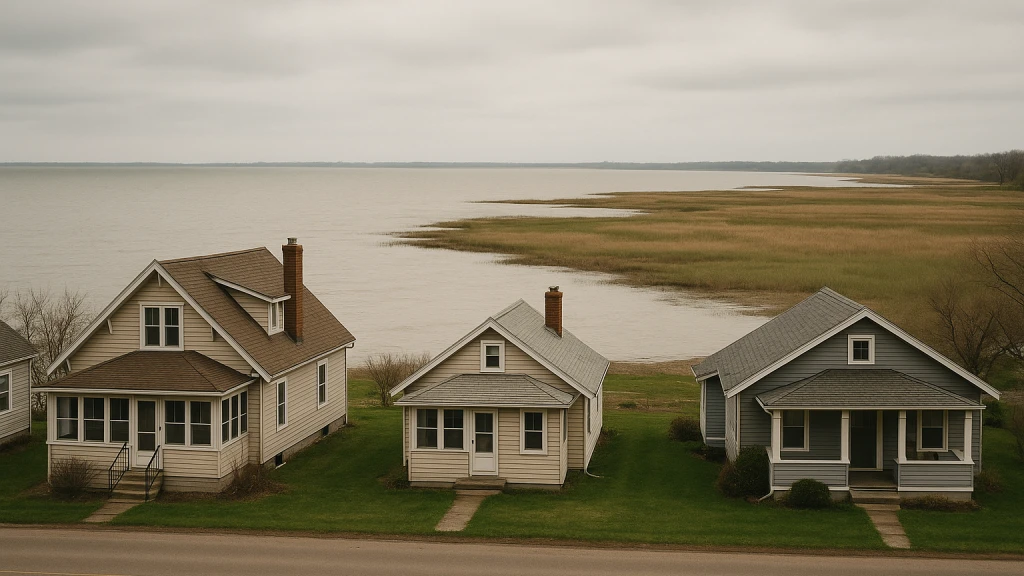
North Toledo and Point Place sit on the lowest, wettest ground in the city — the marshy peninsula and shoreline neighborhoods where the Maumee meets Lake Erie. Point Place in particular is nearly surrounded by water, with the river on one side and the bay on the other, and the high water table here is unlike anywhere else in Toledo. For mold, that geography is decisive: foundations sit close to standing groundwater, basements and crawl spaces struggle to stay dry, and the lake's humidity hangs over everything all summer. If there's a part of Toledo where moisture control is non-negotiable, it's this one.
The housing reflects the setting — older lake cottages and bungalows that grew into year-round homes, post-war houses, and a mix of crawl-space and basement foundations, many built low to the water. A lot of these homes were never designed to keep a high water table out, and the result is chronic dampness: sump pumps that run constantly, basements that weep along the walls, crawl spaces that stay humid, and that persistent lakeside musty smell. Add the storm surge and high-water events that come with living next to Lake Erie, and the water risk is real.
Why this is Toledo's highest-moisture area
- A very high water table from the surrounding river and bay, keeping foundation soil saturated year-round.
- Low, flat, marshy elevation where water has nowhere to drain and storm surge can push it up.
- Lake-effect humidity that keeps indoor and crawl-space air damp through the warm months.
- Older lakeside homes with crawl spaces and low basements built close to the water table.
Sump pumps as a way of life
In Point Place, a working sump pump isn't optional — it's the thing standing between you and a wet basement. Many homes here run their sumps year-round, which makes a pump failure or a power outage during a storm especially dangerous. A battery or water-powered backup sump is one of the smartest investments a Point Place homeowner can make, because the high water table means the pit fills fast the moment the primary pump stops. When a sump does fail here, the resulting flood needs immediate water-damage extraction and drying to head off mold.
Crawl spaces and the lake-humidity problem
Many North Toledo and Point Place homes sit over crawl spaces, and in this humid, high-water setting those crawl spaces are prime mold territory. Ground moisture rises from soil that's never far from the water table, and humid lake air flowing through the vents condenses on the cool framing. The durable answer here is almost always crawl space encapsulation — a vapor barrier over the ground, sealed vents, and dehumidification — which turns the wettest part of the house into a controlled, dry space. Without it, crawl space mold in this area simply regrows.
How we help North Toledo and Point Place homeowners
We connect homeowners in these lakeside neighborhoods with licensed, independent local mold and water-damage pros for a free assessment, and as a referral service we don't profit from the size of the cleanup. Given the geography, the most common needs here are basement mold removal and waterproofing, crawl space remediation and encapsulation, and emergency flood drying after sump failures and high water. If you're dealing with active water now, call (419) 574-6133 for a fast connection.
Because so many homes here are chronically damp, an inspection that maps the moisture and recommends a real control strategy — not just a cleanup — is often the most valuable first step.
A moisture-control plan, not just a cleanup
What sets lakeside remediation apart in North Toledo and Point Place is that a one-time cleanup almost never holds on its own — the high water table and lake humidity will simply re-create the conditions for mold unless the home has a real moisture-control system. So the most valuable thing a local pro brings here isn't just removal; it's a plan. That usually combines several elements: redundant sump protection so the pit keeps emptying through a storm outage, a sealed or encapsulated crawl space where applicable, drainage and crack repair to limit groundwater intrusion, and dehumidification sized to keep the air dry through the humid season. Put together, these turn a chronically damp lakeside home into a controlled, dry one.
For homeowners, the practical takeaway is to think in terms of systems rather than incidents. A house this close to the water needs ongoing moisture management the way it needs a working furnace — not as an emergency response, but as a permanent part of how the home is run.
Watching the lake and the seasons
Living near Maumee Bay and Lake Erie also means staying alert to the seasonal and weather patterns that drive water events here: spring snowmelt and high water, intense summer storms, and the occasional lake storm surge that pushes water up onto low ground. Homeowners who test their sump and its backup before each storm season, keep an eye on basement and crawl-space humidity through the summer, and act on the first musty smell rather than waiting tend to avoid the big problems entirely. If you've just had water come in, fast extraction and drying is what keeps it from becoming mold — and in this part of town, fast really does matter.