
Mold in West Toledo homes
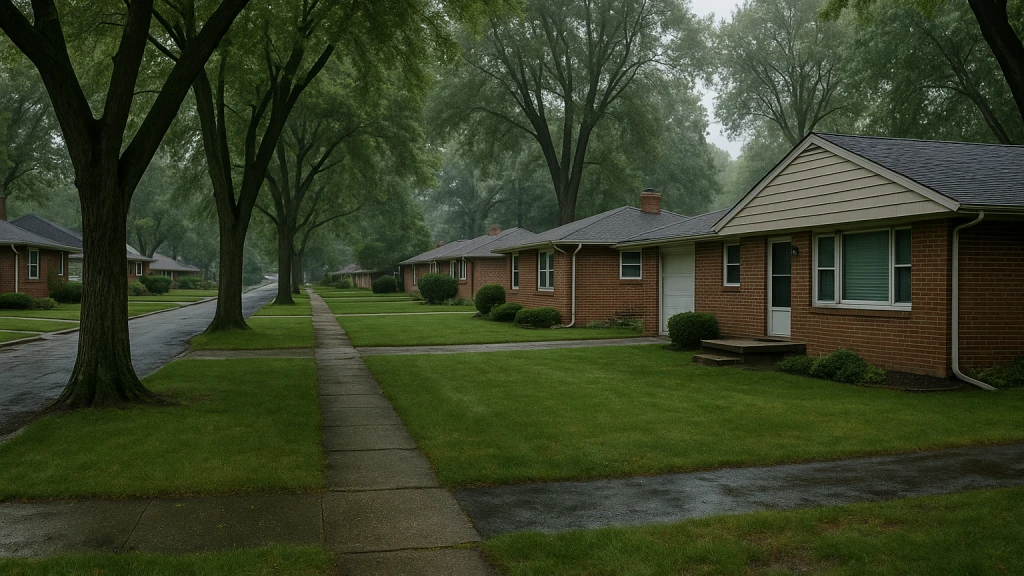
West Toledo — the broad stretch of neighborhoods running out Sylvania, Secor, and Monroe toward the Sylvania line, including areas like Five Points, Ottawa, Westgate, and Reynolds Corners — is largely a city of mid-century brick ranches, two-stories, and older homes built when basements were standard and waterproofing was an afterthought. That combination is exactly what feeds mold here. The soil is the same heavy lake-plain clay found across the region, slow to drain and quick to hold water against a foundation, and most of these homes have full basements that take the brunt of it.
The typical West Toledo mold call starts in the basement. A musty smell at the bottom of the stairs, a damp corner after a wet spring, staining along the bottom of a finished basement wall, or fuzzy growth on stored boxes and the back of paneling. The cause is usually some mix of seepage through the block, condensation on cool walls during a humid summer, and the occasional sump-pump scare during a thunderstorm. Because so many West Toledo basements were finished decades ago with framing tight against the block, the growth often hides behind the walls long before anyone smells it.
Why this part of town is prone to it
- Aging housing stock with block foundations, original moisture barriers, and basements finished before modern best practices.
- Heavy clay soil that drains slowly and presses groundwater against foundation walls, especially in spring.
- Mature trees and flat lots where grading has settled over the years and roof water no longer drains away from the house.
- Humid summers that condense moisture on cool basement walls and feed mold without any visible leak.
The neighborhoods we hear from
From the established streets near Ottawa Hills' edge and the Old Orchard area to the post-war neighborhoods around Westgate and the homes along Monroe and Laskey, the pattern repeats: solid older houses with basements that were never meant to stay perfectly dry in a humid lake climate. Homes near the small creeks and low spots that thread through West Toledo see it a bit worse, since surface water lingers and the water table sits closer to the surface there. Attic mold also shows up across West Toledo in winter, where older homes with modest insulation and tired ventilation let warm indoor air condense on cold roof sheathing.
How we help West Toledo homeowners
We're a free referral service that connects West Toledo homeowners with licensed, independent local mold professionals. We don't do the remediation ourselves, which means we have no reason to oversell a cleanup — our job is to match you with a vetted local pro for a free, no-pressure assessment. Whether you've got a musty finished basement, suspect black mold behind the paneling, need an inspection before selling, or are dealing with a flooded basement after a storm, we'll point you to someone who handles that specific problem.
The most common services West Toledo homeowners ask about are basement mold removal, attic mold remediation, and pre-sale inspection and testing. If you're not sure what you're dealing with, that's fine — describe the smell, the room, and when it started, and we'll help you figure out the next step. Read more about why Toledo homes get mold or call (419) 574-6133 for a free quote.
Don't wait out a damp basement
Mold in a West Toledo basement rarely fixes itself, because the moisture that causes it — clay soil, an aging foundation, humid summers — isn't going anywhere on its own. The longer a finished wall stays damp, the more material has to come out and the bigger the eventual bill. Catching it early, fixing the water, and controlling the humidity is far cheaper than gutting a basement two years from now. If you've noticed the signs, get a free assessment from a licensed local pro and find out exactly what you're dealing with.
What a West Toledo basement project usually involves
Because so many West Toledo homes share the same construction — full basements, block foundations, and finishing done in past decades — the remediation tends to follow a familiar path. A pro starts by reading the moisture and tracing how water is getting in, whether that's seepage through the block, condensation from humid summer air, or roof water dumping at the foundation from a settled grade or a short downspout. The affected lower portion of finished walls comes out along with any wet carpet, pad, or insulation; the block and sound framing are cleaned and treated; and the space is dried to a verified target before anything is rebuilt. The rebuild itself is done smarter than the original — with a gap against the foundation and moisture-tolerant materials — so a future wet spring doesn't restart the problem.
Alongside the cleanup, the durable fixes are often the unglamorous ones: re-grading a settled spot so the soil slopes away from the house, extending downspouts, adding or upgrading a sump with backup power, and running a properly sized dehumidifier through the humid months. A good local pro will be candid about which of these your specific home needs.
Pairing mold work with a home sale
A lot of West Toledo mold calls come from people preparing to sell or fresh off a buyer's inspection that flagged the basement or attic. If that's you, the smart sequence is to get an independent inspection first, so you know the true scope and aren't reacting to a buyer's worst-case interpretation. From there you can decide whether to remediate before listing or to price it in, and you'll have documentation showing the problem was professionally handled — which reassures buyers and keeps the deal on track. Catching it on your own timeline, rather than under the pressure of a pending sale, almost always costs less and stresses you less.