
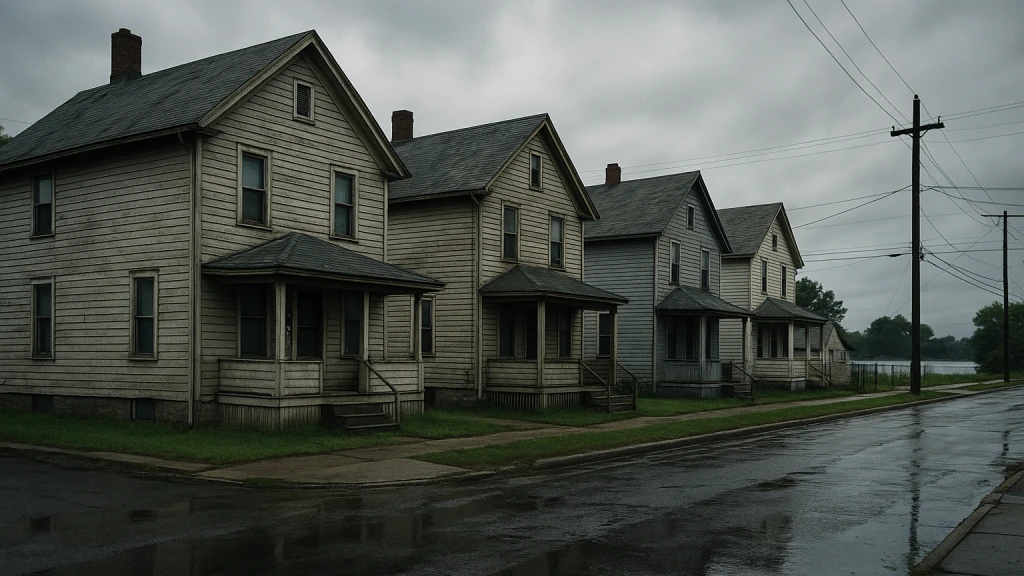
Mold in East Toledo and Birmingham homes
East Toledo — across the Maumee from downtown, including the historic Birmingham neighborhood and the streets running out toward Oregon — is some of the lowest, oldest, and most flood-aware ground in the city. Built up around the river, the old industrial flats, and the rail yards, much of East Toledo's housing dates to the early 1900s, with the stone and block foundations, plaster walls, and minimal moisture barriers of that era. Add proximity to the river and a high water table, and you have a part of town where basement water and the mold that follows are simply part of life.
The defining feature here is elevation: East Toledo sits low relative to the river and the bay, so when heavy rain overwhelms the older combined sewers or the river runs high in spring, water has a short trip into basements. Sewer backups and sump overwhelm are more common in this part of town than in the higher western neighborhoods, and every one of those events starts the mold clock. Even between floods, the high water table keeps the ground around foundations wetter than average, feeding the slow seepage that grows mold on basement walls and in crawl spaces.
What drives mold on this side of the river
- Low elevation near the river and bay, with a high water table that keeps foundation soil saturated.
- Century-old homes with stone and block foundations, plaster, and original drainage never designed to stay dry.
- Older combined sewers that can back up into basements during intense rain.
- Spring river levels and snowmelt that raise groundwater and occasionally flood low-lying streets.
The Birmingham and riverside pattern
Birmingham, one of Toledo's oldest neighborhoods, is full of tightly built early-1900s homes with deep, often damp basements and the plaster-and-lath construction that hides moisture well. In these houses, a slow basement seepage problem or a backed-up drain can grow mold behind plaster and in crawl spaces for a long time before it's found. The riverside and low-lying streets see more outright water events — the kind where a finished basement floods and needs fast water-damage drying before mold takes hold. After any sewer backup, the contaminated "black water" means affected porous materials usually have to be removed rather than dried, which makes a fast, professional response especially important here.
How we help East Toledo homeowners
We connect East Toledo and Birmingham homeowners with licensed, independent local mold and water-damage professionals for a free, no-pressure assessment. As a referral service, we don't profit from the size of the job — we match you with a vetted local pro suited to your situation. Given the neighborhood, the calls we field most are flood and water-damage remediation after backups and high water, basement mold removal, and crawl space remediation in the older homes. If you're mid-emergency with water in the basement right now, call (419) 574-6133 and we'll get you connected fast.
For the slower-burning problems — a musty plaster wall, a damp crawl space, growth behind basement paneling — an inspection is usually the right first step, since these old homes hide moisture well. Learn more about what to do after a flooded basement if you've just been hit.
Acting fast pays off near the river
In a low, flood-prone neighborhood, the gap between a manageable cleanup and a major remediation is measured in hours. Standing water that's extracted and dried within a day or two often prevents mold entirely; water that sits over a weekend almost guarantees it. If you're in East Toledo and dealing with water or mold, the smartest move is a fast call and a free assessment from a local pro who knows this side of the river.
Building back smarter after a low-ground flood
For East Toledo homes that flood repeatedly, the most valuable conversation isn't about the cleanup — it's about making the basement more flood-resilient so the next event does less damage. That can mean finishing (or refinishing) a basement with flood in mind: moisture-tolerant materials, finishes that sit up off the floor, and electrical and mechanicals raised where possible, so a few inches of water is an inconvenience rather than a gut job. It can mean a backwater valve to stop sewer backups, a battery-backup sump so an outage during a storm doesn't sink you, and keeping valuables in sealed bins up off the slab. None of this stops the water entirely in a low neighborhood, but it dramatically shrinks what a flood costs you in dollars and mold risk.
A local pro who works this side of the river can help you weigh these against your budget and your flood history. The goal isn't a fortress; it's a basement that bounces back instead of becoming a recurring remediation.
The historic-home angle in Birmingham
Birmingham's older homes add a preservation dimension to the usual moisture story. These tightly built early-1900s houses have plaster walls and deep basements that hide moisture well, so a problem can develop quietly behind original finishes. When remediation is needed, it's worth using a pro who understands older construction — one who removes only what's truly affected and salvages historic plaster and trim where possible, rather than gutting like a modern house. Because these homes conceal moisture so effectively, an inspection that maps where water is actually going is especially useful before any work begins, much as it is in Toledo's Old West End.