
Why Toledo attics grow mold in winter, not summer
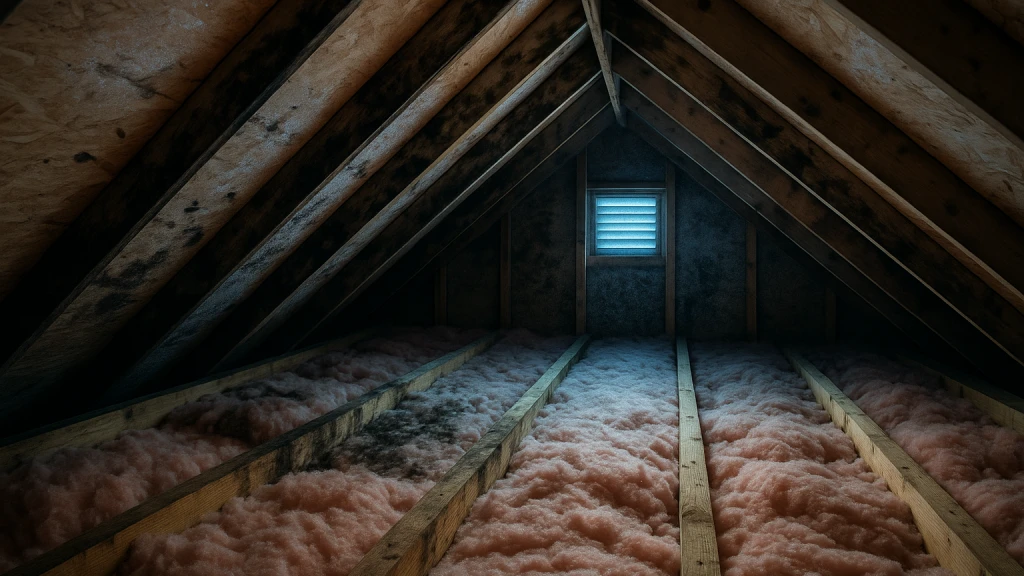
Attic mold surprises people because it usually isn't caused by a roof leak at all — it's caused by the Northwest Ohio winter. From late fall through early spring, warm, moist air from the living space rises and leaks into the cold attic through gaps around light fixtures, the attic hatch, bath fans, and top plates. When that warm, humid air hits the underside of cold roof sheathing, it condenses — sometimes enough to look like frost or even rain inside the attic on a cold morning. Day after day of that condensation keeps the plywood sheathing and the bottom of the trusses damp, and mold takes hold. By the time you notice the dark staining, it's often spread across a whole roof slope.
Ice dams make it worse. When heat escaping into the attic melts the snow on the roof, the meltwater runs down and refreezes at the cold eaves, building a dam of ice that backs water up under the shingles. That water finds its way into the sheathing and the top of the exterior walls, adding a liquid-water source on top of the condensation problem. The result is the classic Toledo attic: black-stained sheathing along the north slope, soggy insulation near the eaves, and a musty smell that drifts down through the attic hatch.
The two things that actually cause it
Almost every case of attic mold in our area traces back to some combination of two failures, and a good remediation addresses both:
- Air leakage and missing insulation that let warm, humid indoor air pour into the attic, where it condenses on cold sheathing.
- Poor ventilation — blocked soffit vents, too few ridge or roof vents, or bath and kitchen fans dumping moist air directly into the attic instead of outside — so the moisture that does get in can't escape.
Bathroom exhaust fans venting into the attic instead of through the roof are an astonishingly common culprit. Every hot shower sends a plume of moisture straight into the cold attic, and in a tight modern house with poor attic airflow, that alone can grow a roof-wide mold problem.
How attic mold remediation works
- Diagnose the moisture path. Before cleaning anything, the pro identifies whether you're dealing with condensation, an ice-dam or flashing leak, exhaust fans venting into the attic, or all three — because cleaning without fixing the cause just buys a year.
- Contain and protect. The attic access is sealed and the home below is protected so spores and debris don't fall into the living space during the work.
- Remediate the sheathing and framing. Affected wood is HEPA-vacuumed and treated; on roof decking, that often means abrasive cleaning or specialized coatings rather than tearing out structural sheathing. Contaminated, soaked insulation is removed and bagged.
- Fix the cause. Air-seal the ceiling plane, add insulation to the right level, clear and improve soffit-to-ridge ventilation, and re-route any bath or kitchen fans to vent fully outside.
Do you have to replace the roof sheathing?
Usually not. Surface mold on structurally sound plywood or OSB can typically be remediated in place — HEPA-vacuumed, treated, and sometimes coated — without replacing the decking, which keeps the cost far lower than a tear-off. Replacement is reserved for wood that's genuinely rotted or delaminated from long-term saturation, most often near a chronic leak or an ice-dam zone at the eaves. An honest inspector will press on the wood, read its moisture, and tell you which boards are sound and which are gone.
What attic mold removal costs
Most attic remediations in the Toledo area fall into the low-to-mid four figures, driven by the square footage of affected sheathing, the amount of insulation to remove and replace, and the ventilation and air-sealing fixes needed to keep it from returning. Adding insulation and correcting ventilation costs more up front but is what makes the remediation permanent. If the moisture has also reached the top of your exterior walls from ice dams, you may be looking at water-damage remediation as well. The starting point is an inspection that diagnoses the moisture path before anyone quotes a cleanup — tell us what you're seeing in the attic and we'll connect you with a local pro who understands cold-climate attics.
The bath-fan fix that prevents a repeat
If there's one upgrade that pays for itself in a Toledo attic, it's getting the moisture out of the house before it ever reaches the cold roof. Start with the bathroom and kitchen exhaust fans: confirm they actually vent to the outside through the roof or a wall, not just into the attic, and that the duct is insulated so the warm, moist air doesn't condense on its way out. Run the bath fan during and for a while after every shower — a simple timer switch makes that automatic. These small moves remove a surprising amount of the moisture that would otherwise rise into the attic and freeze on the sheathing all winter.
From there, the durable attic fixes are air-sealing and ventilation. Sealing the gaps where warm indoor air leaks up — around can lights, the attic hatch, plumbing stacks, and top plates — stops the moisture at its source, and bringing the insulation up to a proper level keeps the ceiling plane warm enough to reduce condensation. Then the attic's own airflow has to work: clear soffit vents feeding a ridge or roof vent so any moisture that does get in can escape. Get those three right and the attic stays dry through the coldest Northwest Ohio winter.
Why timing the work for spring or summer helps
Attic mold is a winter problem, but the best time to remediate and fix it is often the warmer months, when the attic is dry and accessible and contractors can air-seal, add insulation, and improve ventilation without fighting frost and ice. If you discover staining in February, the remediation can still proceed, but planning the ventilation and insulation corrections for spring lets you fix the root cause before the next cold season restarts the cycle. Catching it in fall, before winter, is ideal — you head off a whole season of condensation. Either way, the key is pairing the cleanup with the moisture fix so you're not back in the attic next year.