
When mold stops being a one-room problem
Some Toledo mold situations have outgrown any single room. A basement that has been damp for years and feeds spores up through the furnace into every floor. A long-running roof or plumbing leak that traveled through wall cavities into rooms far from the source. A home that flooded, sat wet, and was never properly dried. A vacant or foreclosed house that spent a humid summer closed up with the dehumidifier off. In these cases, fixing one wall doesn't solve anything, because the moisture and the spores have moved through the whole structure. That's what whole-home remediation is for.
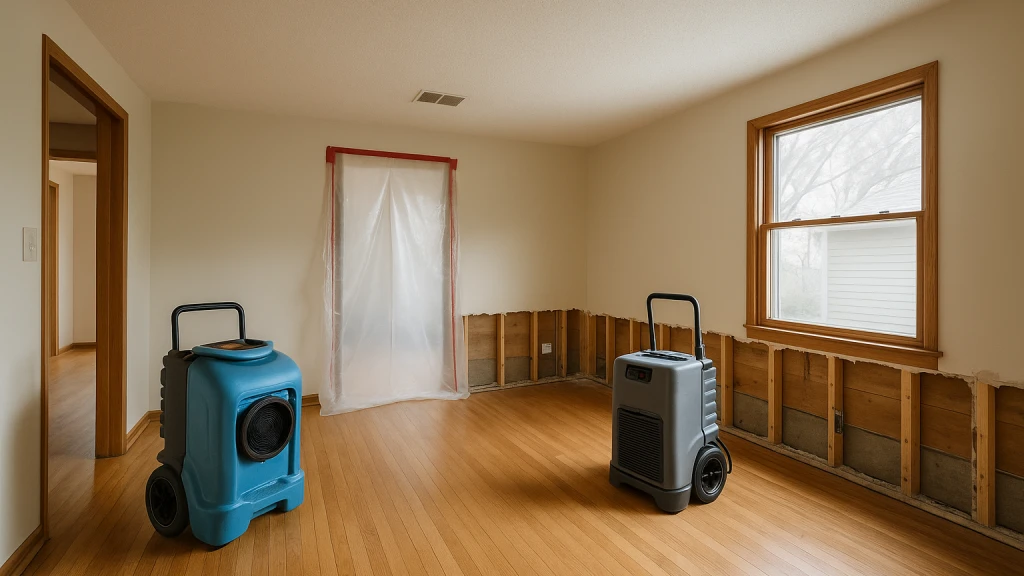
Whole-home doesn't necessarily mean every room is gutted. It means the project is scoped and sequenced at the level of the whole house: the moisture sources are mapped everywhere, the HVAC system is treated as a spore highway that has to be addressed, and the work is staged room by room under containment so that cleaning one area doesn't recontaminate another. It's a bigger, more coordinated job than a single-spot removal, and it rewards a methodical approach.
How a large project is sequenced
- Whole-house assessment. A thorough inspection maps every moisture source and every affected area — basement, crawl space, attic, walls, and the HVAC system — so nothing is missed and the scope is honest.
- Stabilize the moisture. Every water source — seepage, leaks, ventilation, humidity — is corrected or controlled first. Remediating while the house is still getting wet is wasted money.
- Contain and work in zones. The home is divided into containment zones, each put under negative air pressure, so spores from active demolition can't drift into finished areas.
- Remediate the HVAC. Ducts and the air handler are cleaned or addressed so the system stops redistributing spores the moment it kicks on.
- Remove, treat, and dry. Affected porous materials come out; structure is HEPA-cleaned, treated, and dried to verified targets throughout.
- Verify, then rebuild. Independent post-remediation testing confirms the home is back to normal before reconstruction begins.
Why coordination beats a patchwork
The failure mode of large mold projects is doing them piecemeal — one contractor for the basement, a handyman for the bathroom, nobody looking at the attic or the ducts, and no one tracking whether the moisture was actually fixed. Six months later the smell is back and the homeowner has spent more than a single coordinated project would have cost. A properly scoped whole-home remediation, with one assessment driving the whole sequence, avoids that. It also produces the documentation you'll want if the home is being sold, refinanced, or claimed on insurance.
Common whole-home triggers in Toledo
- A chronically wet basement that has been feeding the whole house for years.
- A major flood — river, sewer backup, or burst pipe — that wasn't dried in time.
- A long-undetected roof or plumbing leak that spread through multiple wall cavities.
- A vacant, foreclosed, or estate property that sat closed up and humid.
- A real-estate transaction where an inspection turned up mold in several areas at once.
What whole-home remediation costs
These are the largest mold projects, and the range is wide because the scope is wide. A multi-room remediation with HVAC cleaning, containment, drying, and partial rebuild commonly runs well into five figures; a severe, whole-structure project on a large or badly damaged home runs higher. Because the variable is how much material must be removed and how much reconstruction follows, the only way to a real number is a full assessment. The upside is that a single coordinated project is almost always cheaper and more durable than years of chasing the same smell room by room. If this sounds like your situation — or you've inherited or are buying a house with a known mold history — tell us what you know and we'll connect you with a local pro who handles large projects.
Living through a whole-home project
A larger remediation raises practical questions a single-room job doesn't. Can you stay in the house? Often yes, if the work is staged and contained so the active zones are sealed off under negative air pressure while you live in the unaffected areas — but for severe projects, or when someone in the home is medically vulnerable, staying elsewhere during the dustiest phases is the safer call. A good contractor will tell you honestly which it is, walk you through the sequence, and protect your daily-use spaces and belongings as the work moves through the house. Expect some disruption: containment plastic, equipment noise from air scrubbers and dehumidifiers running around the clock, and areas temporarily off-limits.
It also helps to plan for the reconstruction phase as a separate stage. Remediation removes the mold and dries the structure; rebuilding the finished spaces back to where they were — drywall, flooring, paint, trim — follows once the home passes verification. Knowing that up front prevents the common surprise of expecting a "finished" house the day the remediation crew leaves.
The documentation that protects you afterward
For a project this size, the paperwork is as valuable as the cleanup. Insist on a complete record: the initial assessment and scope, moisture readings before and after, photos throughout, the materials removed, the treatments used, the moisture sources identified and corrected, and independent post-remediation verification. That package does three jobs. It supports any insurance claim. It documents for a future buyer that a known mold problem was professionally resolved — which matters a great deal at resale, since undisclosed or undocumented mold history can derail a sale. And it gives you recourse if anything was missed. A reputable whole-home remediation produces this documentation as a matter of course; if a contractor is vague about providing it, treat that as a warning sign.