
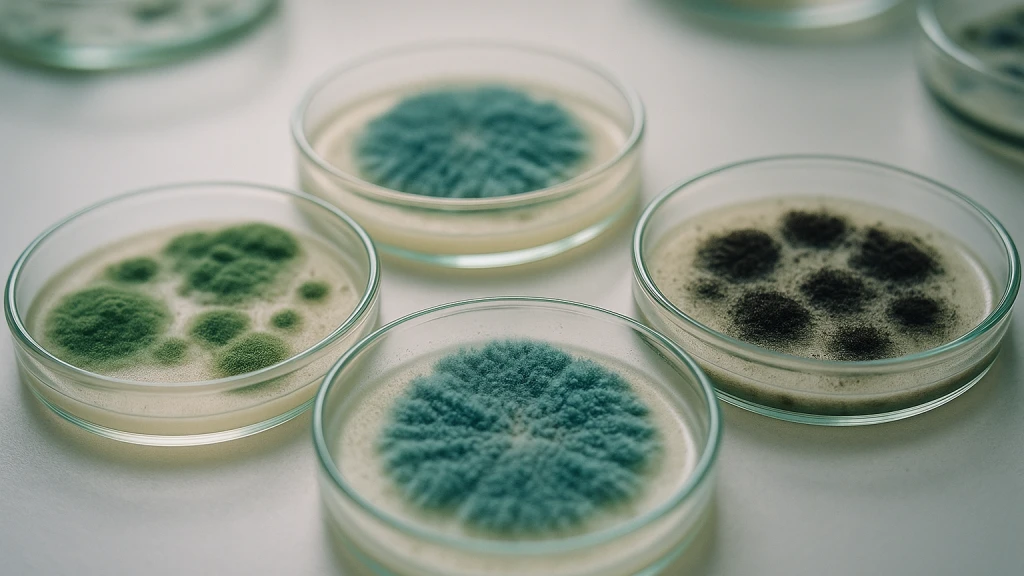
The molds Toledo homeowners actually encounter
There are thousands of mold species, but only a handful show up regularly in Ohio homes, and knowing the common players helps you understand what you're looking at — and how seriously to take it. A crucial point up front: you generally cannot identify a mold species reliably by color or appearance alone. "Black mold" is a look, not a species, and several harmless molds are dark while some problematic ones aren't. Lab analysis is the only way to be certain. That said, the practical response is usually the same regardless of species: find the moisture, contain the area, and remove what's growing. Here are the molds you're most likely to meet in a Toledo house.
Cladosporium — the everyday one
Cladosporium is one of the most common indoor molds anywhere, including Toledo. It appears as olive-green, brown, or black spots and grows readily on damp surfaces — window sills where condensation collects, bathroom walls, painted surfaces, fabrics, and the cool, humid surfaces of a Toledo basement. It's a frequent allergen, capable of triggering the sneezing, congestion, and asthma flare-ups people associate with mold, but it's not in the "toxic" category. It thrives in exactly the humid, condensation-prone conditions our climate produces, which is why it's so often the mold on a sweating basement wall or a foggy window frame.
Penicillium — the blue-green spreader
Penicillium shows up as blue-green or gray-green fuzzy growth and is notable for spreading quickly, especially on water-damaged materials — wet drywall, carpet, insulation, and wallpaper after a leak or flood. In a Toledo home that's had a basement flood or a slow leak, Penicillium is a common colonizer, and because it releases spores easily, it spreads through the air readily. It's another significant allergen and can affect people with respiratory sensitivities. Its quick spread on wet building materials is part of why fast drying after water damage matters so much.
Aspergillus — the common but variable one
Aspergillus is a large, varied group of molds found in many homes, appearing in a range of colors and textures. Most exposure is harmless to healthy people, but it's a meaningful allergen, and certain species can pose more serious risks to people who are immunocompromised or have lung conditions. It grows on a wide range of materials and is common in damp, dusty indoor environments — including basements, crawl spaces, and HVAC systems. Because it's so variable, it's a prime example of why lab identification beats guessing.
Stachybotrys — the one people mean by "black mold"
Stachybotrys chartarum is the species behind the "toxic black mold" reputation. It's a dark, often slimy-looking mold that feeds specifically on cellulose — the paper facing on drywall, wood, and cardboard — and, critically, it requires sustained moisture to grow. It doesn't bloom from a brief humidity spike; it needs material that has stayed wet for days, which in Toledo means a chronic leak, long-term basement seepage, a sump failure that wasn't dried, or an ice-dam leak that soaked a ceiling. It can produce compounds that aggravate respiratory issues, particularly in sensitive people, which is why it's handled with full containment. The reputation is somewhat overstated online — you don't need to panic — but it does warrant careful, professional removal rather than DIY scrubbing.
Alternaria and others
Alternaria is another common allergenic mold, often found in damp bathrooms, showers, and around sinks and windows — anywhere with regular moisture. It's a frequent trigger for allergy and asthma symptoms. Along with the molds above, you may encounter Aureobasidium (often pink-to-black, around windows and caulk) and various others. The full roster matters less than the pattern: these are all moisture-driven, and they all respond to the same fundamental fix.
Why the species matters less than the moisture
It's easy to fixate on "what kind is it?" but for most Toledo homeowners that's the wrong first question. Every mold in this list needs one thing to grow: moisture. Identify and fix the water source, remove the affected materials properly, and the species becomes academic. Identification earns its keep in specific cases — confirming Stachybotrys, documenting for insurance or a sale, or guiding extra caution when a household member is medically vulnerable — but it never replaces the core work of drying the source and cleaning out the growth. If you've got mold you can't identify, an inspection can sample it and, more importantly, find the moisture feeding it. Call (419) 574-6133 for a free assessment.
Where each mold tends to show up in a Toledo home
It helps to connect the common molds to the places they actually appear in local homes, because location is a clue to both the species and the moisture source. Cladosporium favors cool, condensation-prone surfaces — basement walls, window frames, and bathroom walls — so it's the typical growth on a sweating summer basement wall. Penicillium colonizes water-damaged materials fast, so it's common on drywall, carpet, and insulation after a leak or basement flood. Aspergillus turns up in damp, dusty environments including basements, crawl spaces, and HVAC systems. Alternaria likes regularly wet spots around showers, sinks, and windows. And Stachybotrys — true black mold — concentrates specifically where cellulose materials have stayed wet for days, which in Toledo means chronic leaks, long-term basement seepage, and ice-dam-soaked ceilings. Matching what you see to where you see it often points straight to the water you need to fix.
None of this replaces lab identification when you need certainty, but it does help you understand your home's particular pattern and where to direct attention.
The bottom line for homeowners
If there's one thing to take from all of this, it's that the species matters far less than the moisture for almost every household situation. Whatever the mold is, it grew because something stayed wet, and it will keep growing until that water is addressed — so the productive question is rarely "what kind is it?" but "where is the moisture, and how do I stop it?" Identification earns its place in specific cases: confirming a suspected toxic mold, documenting for an insurance claim or a home sale, or guiding extra caution when a household member is medically vulnerable. Outside those cases, the response is consistent across every mold on this list: find the water, contain the area, and remove the growth properly. If you've got mold you can't identify and want certainty — or simply want the moisture source found — an inspection can sample it and, more importantly, locate what's feeding it.