Mold remediation that respects your operation
Commercial mold problems in Toledo come with a complication homeowners don't face: the building usually can't just shut down. An office with staff, a rental with tenants and a landlord's legal obligations, a restaurant with a health inspection on the line, a clinic with patients and air-quality standards, a retail space with customers — each needs the mold gone and needs the disruption managed. Commercial remediation is as much about scheduling, containment, and documentation as it is about the cleanup itself.
The underlying building science is the same as in homes — find the water, contain the area, remove affected materials, dry to a verified target — but commercial structures add scale and complexity: built-up flat roofs that pond and leak, large rooftop HVAC units and long duct runs, multi-tenant walls, drop ceilings hiding moisture, and the kind of square footage where a contained, phased approach is the only way to keep part of the building open while another part is remediated.
Properties we connect across the region
- Office and professional buildings where indoor air quality and employee comfort drive the urgency.
- Rental and multi-family properties where landlords have habitability obligations and need clear documentation.
- Retail and restaurants where appearance, health codes, and staying open all matter at once.
- Medical and dental offices with stricter air-quality requirements and sensitive occupants.
- Warehouses, schools, and institutional buildings with large footprints and complex systems.
What makes commercial work different
Three things tend to define a commercial job. First, scheduling around operations — after-hours, weekend, or phased work so the business keeps running. Second, containment at scale — sealing and negative-air isolating large areas, and protecting occupied zones from the work zone, often while people are still in the building. Third, documentation — commercial owners, property managers, and insurers expect a clear paper trail: scope, moisture readings, materials removed, treatments used, and independent post-remediation verification. That documentation isn't bureaucracy; it's what protects the owner from liability and tenant disputes down the line.
The HVAC factor in commercial buildings
Large commercial HVAC systems are powerful spore distributors. A moisture problem in one part of a building can show up as elevated mold three suites away because the rooftop unit and ductwork carry it there. Commercial remediation almost always has to evaluate and address the air handling system — cleaning ducts, correcting condensate and drain-pan problems, and sometimes adjusting how the building manages humidity — or the cleanup won't hold. In Toledo's humid summers, a commercial system that runs cold and damp can grow mold inside the ductwork itself.
The process, scaled up
- Assessment and plan. A commercial inspection maps moisture, growth, and HVAC involvement, and produces a phased plan that works around your operating hours.
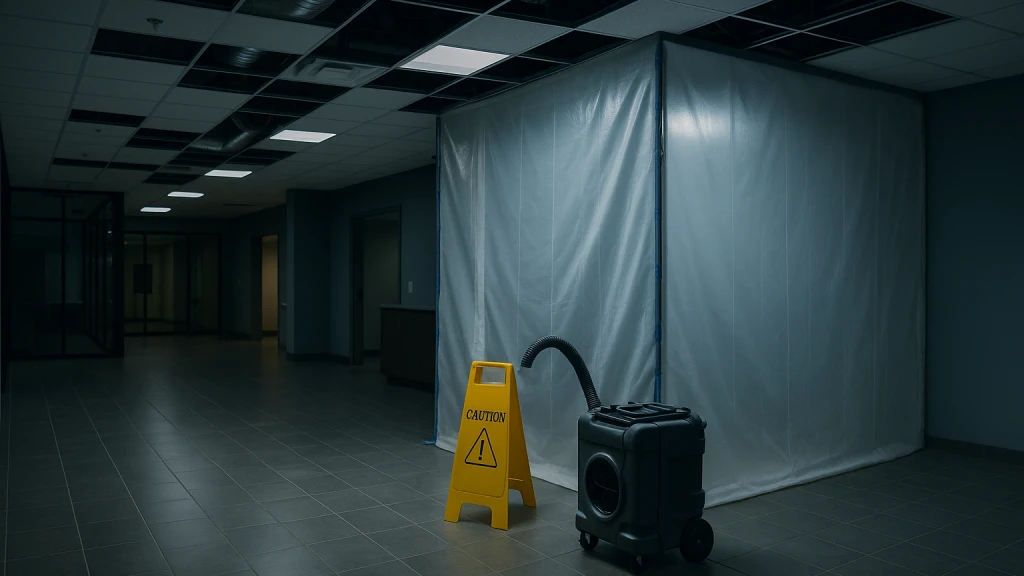
- Containment and air control. Work zones are sealed and isolated under negative pressure, with occupied areas protected throughout.
- Source correction. Roof, plumbing, envelope, or HVAC moisture sources are fixed — coordinated with your facilities team or trades.
- Remediation and drying. Affected materials are removed and bagged, structure is cleaned and treated, and the space is dried to verified targets.
- Verification and reporting. Independent post-remediation testing and a full documentation package close out the job.
What commercial remediation costs
Commercial pricing is too project-specific for a simple number — it depends on square footage, the complexity of the building and its HVAC, how much must be done after hours, and the documentation required. Small contained commercial jobs resemble residential pricing; large or phased projects in occupied buildings run substantially higher, driven mostly by scale and scheduling. The right starting point is a walk-through and assessment so you get a scoped proposal rather than a guess. Tell us about your property and timeline — or call (419) 574-6133 — and we'll connect you with a local pro experienced in commercial work and discreet scheduling.
Minimizing disruption to your business
The art of commercial remediation is getting the work done without grinding your operation to a halt, and a few approaches make that possible. Phasing lets the crew remediate one zone while the rest of the building stays open, moving through the space in stages. After-hours and weekend scheduling keeps the disruption out of business hours entirely for many jobs. Robust containment — sealed work zones under negative air pressure, with protected pathways and clear signage — lets staff and customers use the unaffected areas safely while work proceeds nearby. For tenant-occupied properties, coordinating access and giving advance notice keeps everyone informed and reduces complaints. The right plan depends on your building and your tolerance for disruption, which is exactly what the initial walk-through is for.
It's also worth coordinating the moisture fix with your facilities team or trades early. Commercial mold almost always traces to a building-system issue — a flat-roof leak, an HVAC condensate or humidity problem, a plumbing failure — and lining up that repair alongside the remediation avoids the costly mistake of cleaning a space that's still getting wet.
Protecting tenants, staff, and your liability
Beyond the cleanup itself, commercial mold carries relationship and liability stakes that a homeowner doesn't face. Tenants have habitability expectations and, in disputes, the documented timeline of your response is your strongest defense. Employees and customers notice air quality, and visible mold or a musty smell can quietly damage a business's reputation. The protective move is the same in every case: respond promptly, fix the moisture source, remediate professionally with full containment, and keep thorough documentation of every step — investigation, scope, work performed, and independent verification. That record demonstrates good-faith diligence, satisfies insurers and property managers, and is the best protection if a dispute ever arises. None of this is legal advice; for a specific tenant or liability question, consult an attorney.